
The Settlement
A newsletter from the campaign for a National Care Service
| Volume 1 · Number 6 | September 2026 |

From the co-chair
A million young people out of work, and a sector that cannot fill its posts
Two problems have been sitting next to each other for a year, and nobody has built the road between them. In the spring, the number of 16 to 24-year-olds not in education, employment or training passed one million for the first time since 2013. It has since edged back below that mark, to 981,000 in April to June, though that is still 30,000 higher than a year earlier. Alan Milburn's interim review, published in May, called it a "generational fault line" and warned the figure could reach 1.25 million within five years, a rise from one in eight young people to one in six.
Our sector, meanwhile, has around 96,450 unfilled posts and a vacancy rate roughly three times the wider economy's. Only 8 per cent of the adult social care workforce is aged 18 to 24, against 13 per cent in retail and half of all waiting staff. We are one of the most obvious answers to the government's most urgent labour market problem.
Government has reached the same conclusion, and has been genuinely responsive. The Youth Guarantee names health and social care as one of only three priority sectors for its 350,000 training and work experience placements, so the link between youth unemployment and our vacancies is already written into the policy. On 26 August the first young people started paid work under the Jobs Guarantee, six months of government-funded employment for 18 to 24-year-olds who have been looking for work for 18 months. Officials are asking the sector for input on workforce coordination, and Milburn's recommendations follow this autumn with the next stage of the Youth Guarantee expected behind them. The question is no longer whether these two problems belong together. It is how a scheme designed in Whitehall actually reaches a care employer.
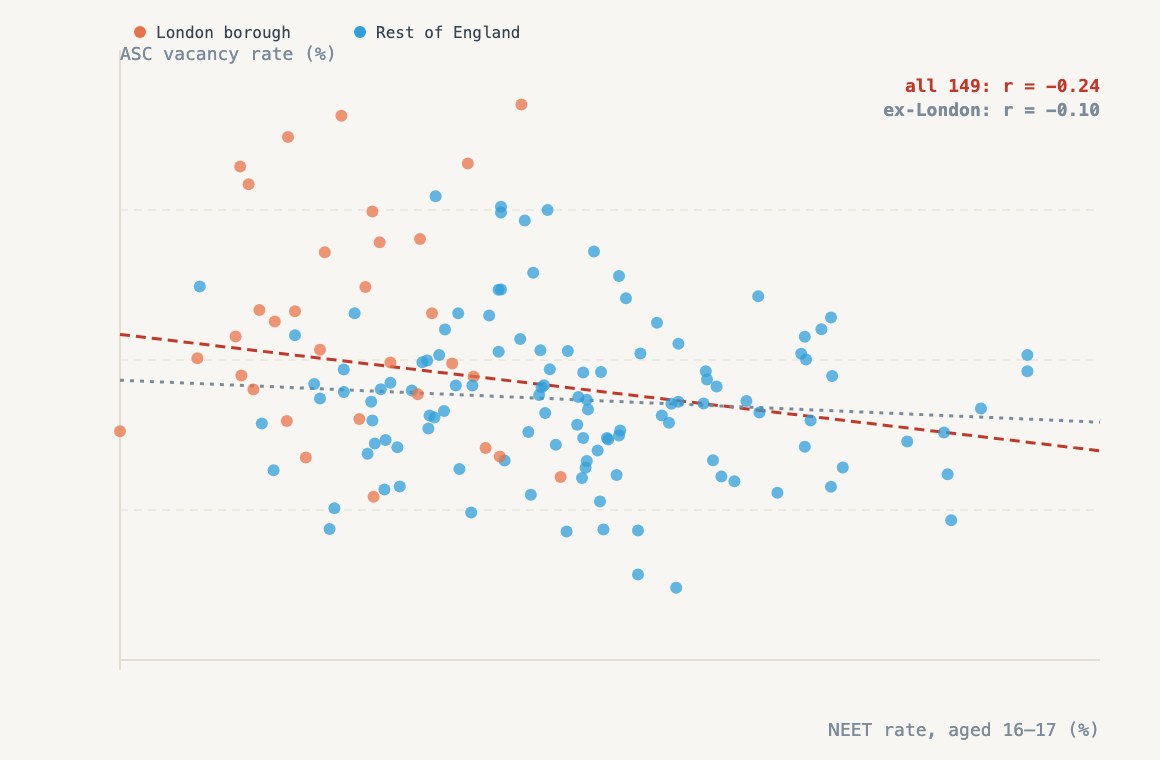
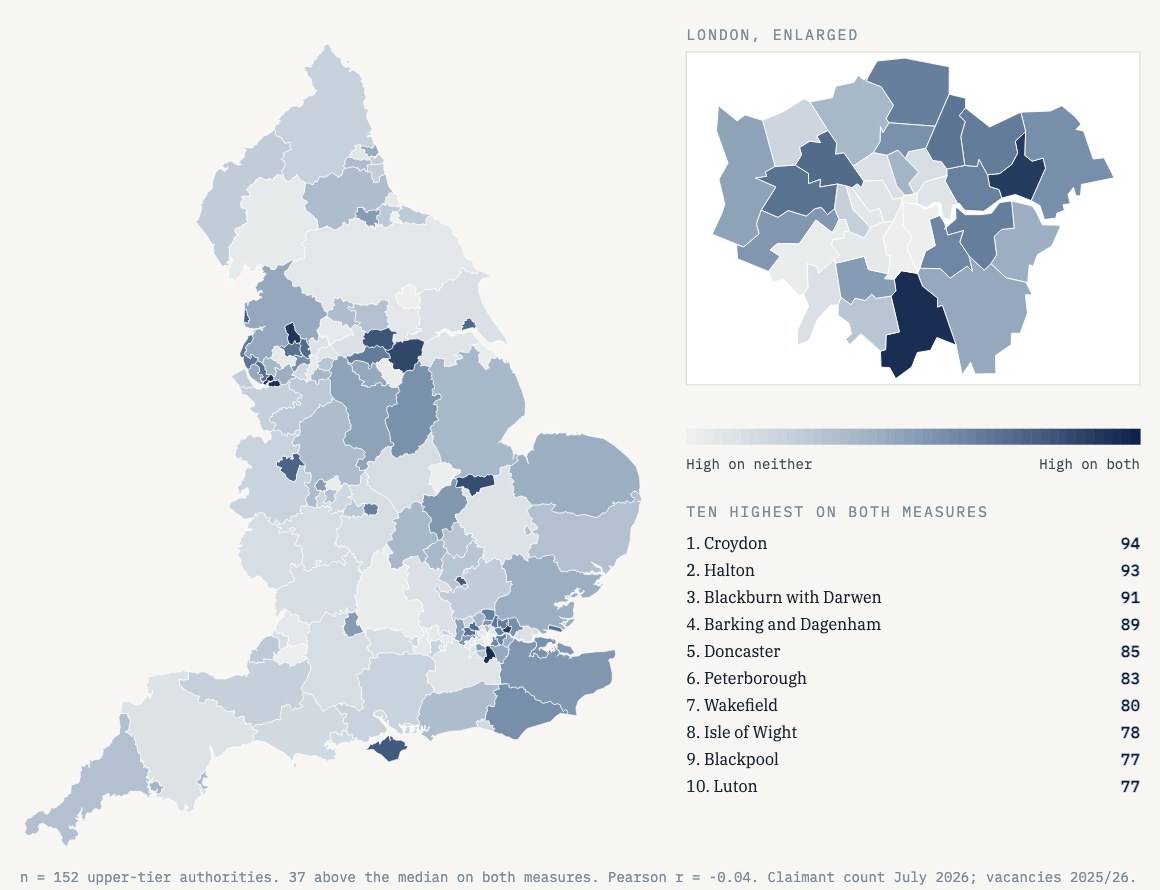
We tested the obvious idea before we proposed it. Match the areas with the most young people out of work to the areas with the most unfilled care posts, and you have a scheme that looks efficient on a ministerial slide. Across 149 English local authorities, the correlation between youth NEET rates and care vacancy rates is minus 0.24, and once London's boroughs come out it falls to minus 0.10, which is not distinguishable from zero. Run it again on a different measure of youth worklessness across all 152 authorities and you get minus 0.04. A council's youth unemployment rate tells you almost nothing about its care vacancy rate.
That does not kill the idea. It shapes it. The scheme has to be national in design, because the two problems are not co-located, and local only in delivery. Our new Care Workforce Mismatch Index identifies the 37 authorities that sit above the median on both measures at once, led by Croydon, Halton, Blackburn with Darwen, Barking and Dagenham and Doncaster. Those are the places to start, because they have the young people and the empty posts in the same borough.
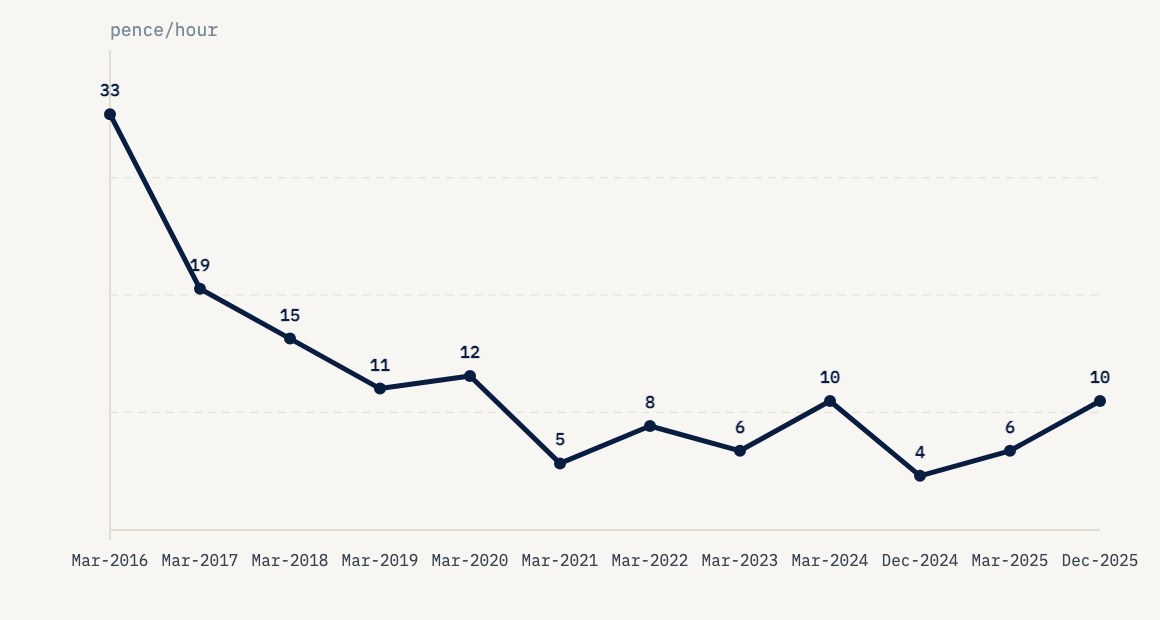
One warning, and it is the important one. Recruitment has never been this sector's real problem, retention has. More than half of care workers under 20 leave within their first year, and the pay premium for five or more years' experience has collapsed from 33p an hour in 2016 to somewhere between 6p and 10p today. Eighty-four per cent of the young people Milburn's reviewers spoke to said they want work or training. They are not the obstacle. A pathway that pours them into a sector that cannot show them a career will leak them straight back out.
There is a practical point that the scheme's designers should hear from us too. Offering a young person work experience in care is a little more complicated than offering it in a shop. Our members are responsible for people who depend on them, so a placement means checks, safeguarding, an induction and a supervisor with time to give before anyone is useful on a shift. A retailer can put a school leaver on the floor on Monday morning. A care provider cannot, and should not. That is why we have done the work on this ourselves, rather than waiting to be handed a scheme built for a different sector.
So our ask is narrow, and it does not need new money. The Alliance has already built a Pathway into Care programme, which takes the Youth Guarantee's components and adds what a young person's first weeks in a care setting actually require, namely structured supervision, honest preparation for the emotional content of the work, and a defined route from placement into a job, and from that job into a career. It offers young people careers, not just jobs. We are asking government to adopt it as the care-sector route within the Youth Guarantee, rather than commissioning the design of something the sector has already built.
The Pathway is one strand of the wider case for workforce reform that the Alliance makes in Towards a National Workforce Settlement, our second policy paper, alongside nationally recognised Professional Levels, a national framework for delegated healthcare, a fully funded Fair Pay Agreement and a ten-year workforce plan. The order matters. A route into the sector is only worth building if there is a career structure at the other end of it, and that structure is what the rest of the paper sets out.
 | Melanie Weatherley MBECo-Chair, Care Association Alliance |
The paper
Towards a National Workforce Settlement · Policy Paper Two · Draft for member comment
The paper is still in review, so both links are unlisted and will not surface in search. Section 07 carries the youth and career-switcher case in full, with the methodology behind every figure in this issue.
Read the storyboard Download the full draftThe Number
This edition’s figure
3 to 1
Across England there are close to three young people claiming unemployment-related benefits for every unfilled adult social care post, 288,470 against 96,450. The catch is that they are not in the same places, which is precisely why the pathway has to be designed nationally and piloted locally.
Source: Care Workforce Mismatch Index, Bridgehead Communications for the Care Association Alliance, August 2026. ONS Claimant Count for 16 to 24-year-olds, July 2026, against Skills for Care local authority vacancy rates, 2025/26, across 152 upper-tier English authorities.
The ask
What we want done with the care sector's share of the Youth Guarantee
Adopt the Pathway into Care. The Alliance's programme already exists. It is built around what a care placement actually involves, which is more than a shift in a shop. It is designed to offer careers rather than just jobs, and it serves career switchers and economically inactive adults as readily as school and college leavers. It needs a decision to adopt rather than a new budget line. The Youth Guarantee is being implemented now, so a care-sector route that arrives in year three arrives after the vehicle it was meant to travel in has left.
Start where the evidence points. Thirty-seven authorities sit above the median on both youth worklessness and care vacancies. Pilot there, learn, and scale from what works, rather than setting a blanket national target that the data does not support. We want this run on a test, learn and share basis, the pattern that worked for Trusted Assessor.
Fix the mechanism. This is where we have actually got stuck, and it is mechanical rather than political. The Youth Guarantee's funding routes, including the £3,000 Youth Jobs Grant, were not designed around how social care employs people, and as they stand they do not fit. Getting that right is a Treasury and Department for Work and Pensions design question, and it is the one we are now pressing.
Do not treat young people as the whole answer. Twenty-seven per cent of the existing workforce is already over 55, and midlife career switchers are a second recruitment pool that deserves explicit recognition, particularly now that the international route is closed to new applicants in care worker roles.
And it sits inside a wider programme of workforce reform. The Pathway is one of ten recommendations in Paper Two, alongside Professional Levels, a delegated healthcare framework, the Fair Pay Agreement and a funded ten-year workforce plan. The four funded asks total £61m to £76m a year, set against a sector that loses around 335,000 people a year at a replacement cost of £1.2bn to £2.0bn. Reducing turnover by a single percentage point returns £52m to £87m a year, which is more than the whole package costs.
The paper has been shared with a deputy director at the Department of Health and Social Care, with positive initial feedback. That receptiveness is the opening this issue is about, and it is why the mechanics now matter more than the argument.
From the paper
The evidence in three charts
Forward planning
The NEET news calendar between now and Christmas
01 Labour Party Conference, 27 to 30 September, Liverpool
The first fixed point where youth employment and care workforce numbers meet in the same room.
02 Conservative Party Conference, 4 to 7 October, Birmingham
Both conferences fall before the Budget, which makes them the last useful window for an ask that has a price attached.
03 The Milburn review's recommendations, expected this autumn
The interim report diagnosed the problem in May. The solutions report is where a care-sector pathway either appears in the recommendations or waits for the next round, and government is expected to set out the next stage of the Youth Guarantee once it lands. Paper Two is written to be in front of it.
04 Autumn Budget, 28 October
Youth Guarantee funding runs to 2028/29 on the Autumn 2025 settlement of £820 million, with a further £1 billion for employment and skills announced in March. Our ask needs a decision on the mechanism rather than a new line in the Red Book.
05 ONS quarterly NEET statistics, 26 November
The next reading on whether the figure keeps falling back from the million mark or turns again. The monthly Labour Market Overview, usually the third Tuesday, carries youth unemployment in between.
06 Skills for Care's next State of the Adult Social Care Sector, June 2027
This year's edition, published on 24 June, put the sector vacancy rate at 6.2 per cent, its lowest since 2015/16. As we said at the time, there are also 130,000 fewer British workers in adult social care than in 2020/21. Falling vacancies and a shrinking domestic workforce are the same story, not two.
Action for members
Three things to do now
1 Comment on Paper Two before it publishes
The designed draft went to the steering group on 2 September, with a new empirical section on the youth and care mismatch. Comments are open now and there is still time for them to change the paper rather than the press release.
Read the storyboard2 Tell us if your area is on the list
Thirty-seven authorities score above the median on both youth worklessness and care vacancies. If your association covers one of them and your members would host placements, say so. Named pilot sites turn a national argument into something a minister can announce.
Check the index3 Forward this issue to your own members
The campaign's reach depends on cascade rather than national coverage alone. Providers who would take on a young person through the Youth Guarantee are the evidence base for the ask.